Art Direction Product Design Visual Designer Why Are There So Many Names?
25 names every graphic designer should know
Equally a graphic designer, there are a few names you lot absolutely need to know. These are the designers who have changed the fashion graphic design is seen in the gimmicky globe. They are the mavericks, the thinkers, and those who accept made a divergence to pattern.
With a vast range of designers from notable book cover artists to creators of logos and across, nosotros've truly covered the whole spectrum of the industry here. Afterward you lot savor this jaunt through the graphic blueprint world, yous might want to upgrade your toolkit with the best graphic design software.
- Become Adobe Creative Deject
01. Chip Kidd
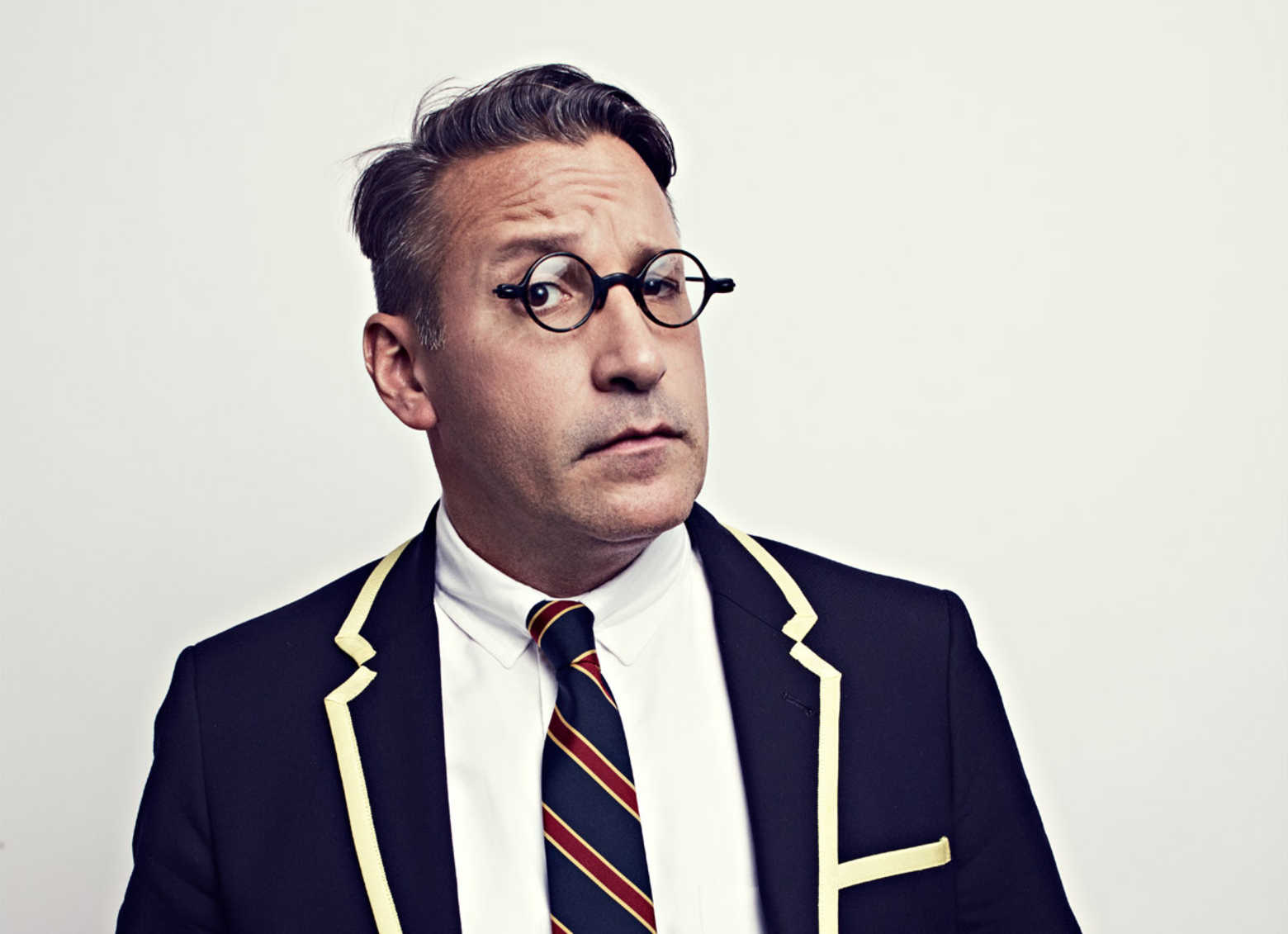
Based in New York Metropolis, Chip Kidd is best known for his stunning book jackets – most notably for seminal publishing house Alfred A. Knopf. Kidd has worked for writers such James Elroy, Michael Crichton and Neil Gaiman (amongst many others).
Jurassic Park is one of his most notable book covers, and in his 2005 monograph he explained the thinking behind information technology: "When trying to recreate 1 of these creatures, all anyone has to become on is bones, right? So that was the starting point...
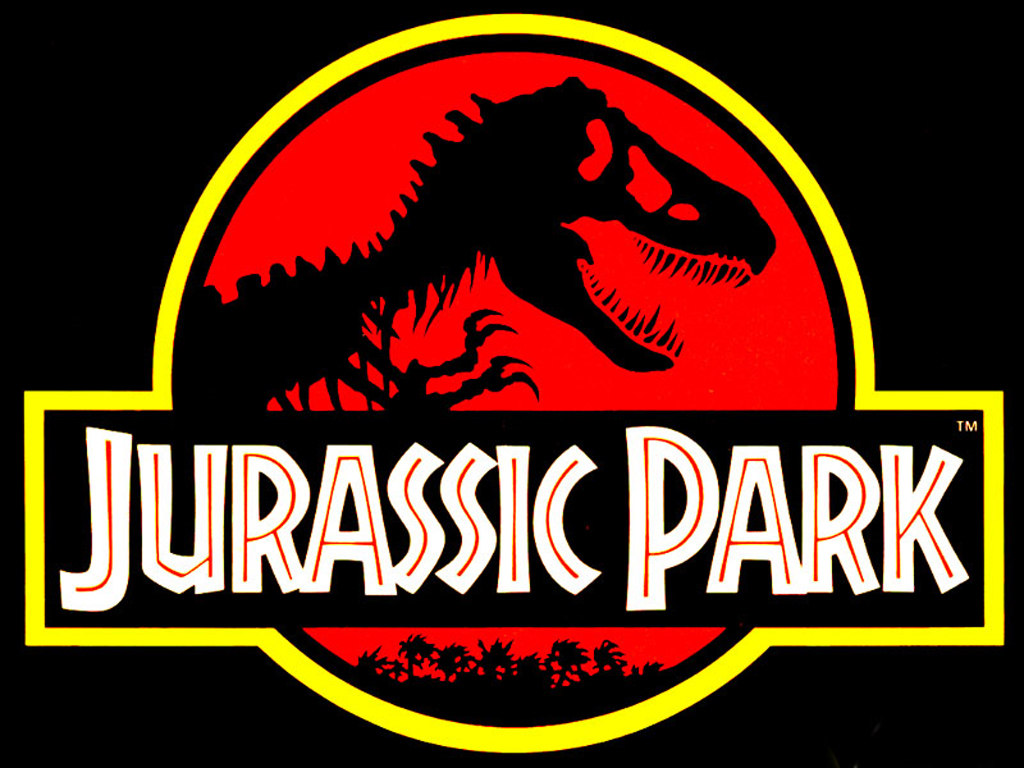
"Not merely was the drawing integrated into the movie poster, it became the logo in the film for the park itself. I think it'due south safe to say that the Jurassic Park T-Rex became i of the most recognisable logos of the 1990s."
Listen to Kidd'southward hugely entertaining TED talk here. Oh, and if you want to run across what you could learn from Kidd's portfolio, cheque out our article.
02. Rob Janoff
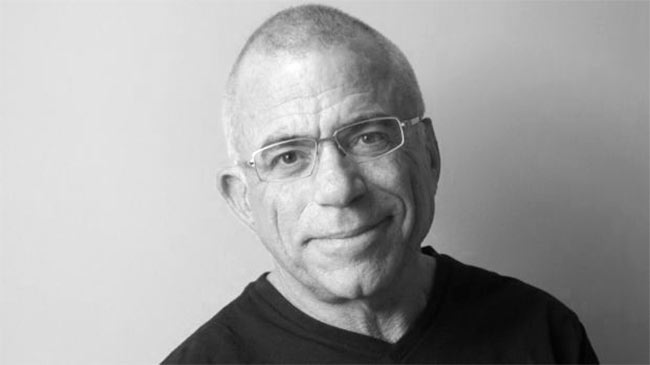
Why do you lot need to know about Rob Janoff? Unproblematic: he designed the Apple tree logo. Janoff masterminded perhaps the nearly famous mark in the world today while at ad agency Regis McKenna back in 1977. And although information technology'southward been tweaked, the basic form has remained the aforementioned ever since – a testament to its simplicity and longevity (and it was created in only two weeks).
Back in 2013, Janoff told u.s. that the idea of an apple with a bite taken out of it was "really a no-brainer". He continued: "If y'all have a computer named after a piece of fruit, mayhap the image should look like the fruit? And then I saturday for a couple of weeks and drew silhouettes of apples.
"Bite is too a estimator term. Wow, that was a happy blow. At that betoken I idea 'this is going to have a flash and a nod with it, and give it personality'."

And as for the now forgotten coloured stripes? "The large deal about the Apple tree Ii was that information technology was the merely computer that reproduced color images on the monitor, and it was the but estimator that you could plug into your home colour Television set.
"Also, a lot of information technology had to do with the aesthetic origins of both Steve [Jobs] and I, which was a kind of hippy aesthetic and The Beatles and Yellow Submarine."
03. Peter Saville
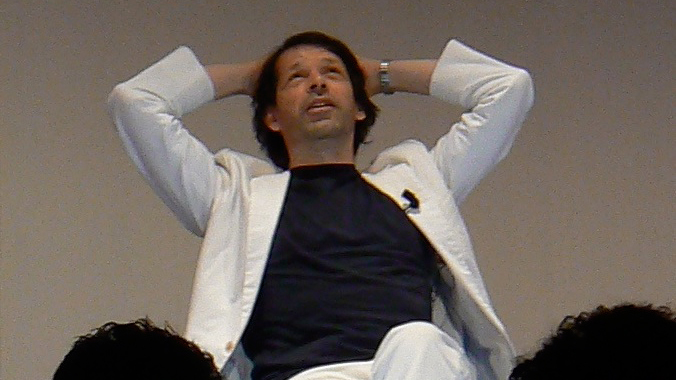
Peter Saville is best known for his record sleeve designs for Factory Records artists – retrieve Joy Division and New Order (Unknown Pleasures, Transmission, Blue Mon and more). Simply his sleeve work spans five decades. Saville is one of the virtually prolific tape designers of all time, if not the most prolific.
Merely the Manchester-born designer'southward work doesn't stop at sleeve design. In 2004 he became creative managing director of the Urban center of Manchester; he has worked with way'southward elite including Jil Sander and Stella McCartney; and in 2010 he designed the England football home kit.
In 2013 he told The Guardian all almost the latter: "The red and white thing has been entirely marginalised by one kind of person. Information technology's synonymous with an attitude that is naive, xenophobic, bullying and self-marginalising. I thought, that's not reflective of the team, or football, or of the nation at all.
"But it turns out the market for those shirts are those bloody-minded xenophobic individuals with the shaved heads. When information technology came out, they did not like information technology. They did non like it at all."
Born in 1955, Saville is still going strong – in 2018 he redesigned the Burberry logo.
04. Michael Bierut
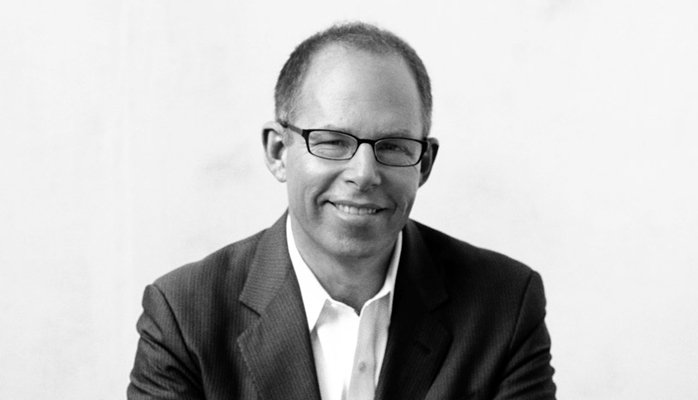
There aren't many design agencies that are more respected than Pentagram – and condign a partner is one of the ultimate pattern accolades. Designer and educator Michael Bierut has been a partner for 27 years at present and has won hundreds of design awards (he's likewise got permanent work in MoMA). Earlier Pentagram, Bierut worked for ten years at Vignelli Associates.
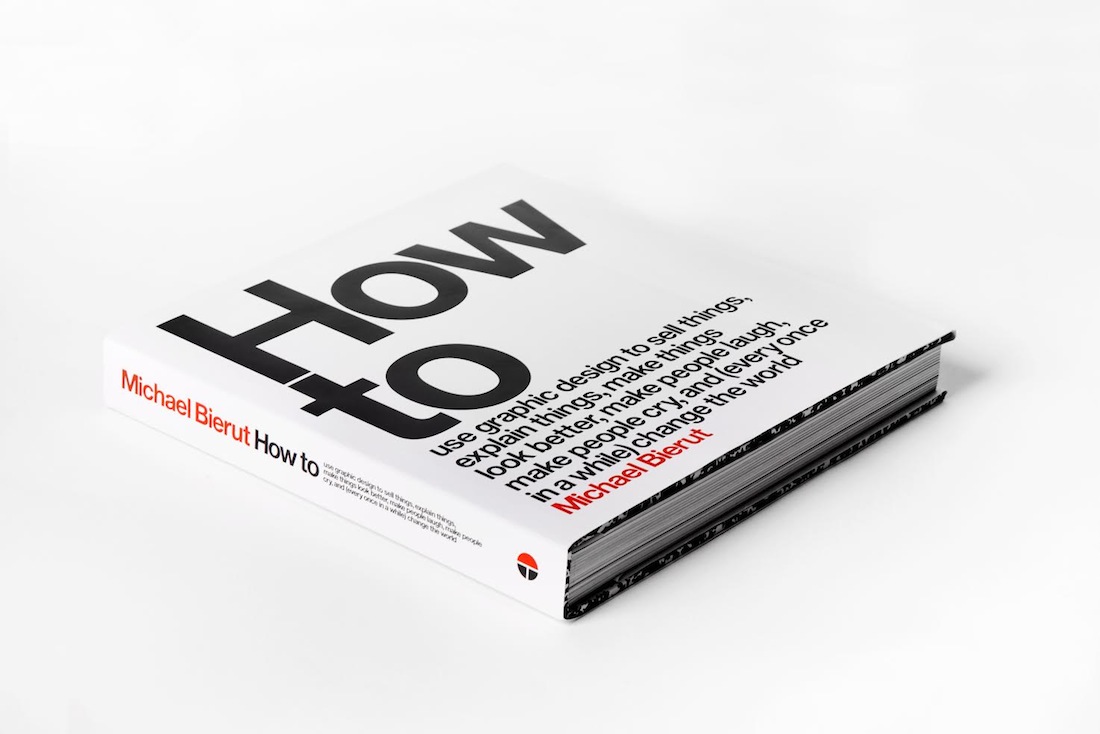
The designer's projects at Pentagram include identity and branding for Benetton, the New York Jets, Walt Disney, pattern piece of work on Billboard mag and Hilary Clinton's 2016 campaign logo. This is of course, merely a pocket-size slice of his sprawling portfolio. Bierut is too a senior critic in graphic blueprint at the Yale Schoolhouse of Art. Bank check out his Monograph – How To – published in 2015 and his collection of essays, Now Yous Meet It, published in 2017.
In 2013, we caught up with his to find out what he looks for in new talent: "The best are people who are vivid and clear, and have peachy work in their portfolio. I could sit with them all day," he says. "The second best have keen work but can't talk about it intelligently. That takes work, merely still information technology'south worth the endeavor.
"I similar people who, in talking well-nigh their work, scratch below the surface. Don't talk about typefaces and Photoshop furnishings; talk nigh the subject matter, and how that interested and inspired you lot."
05. Massimo Vignelli
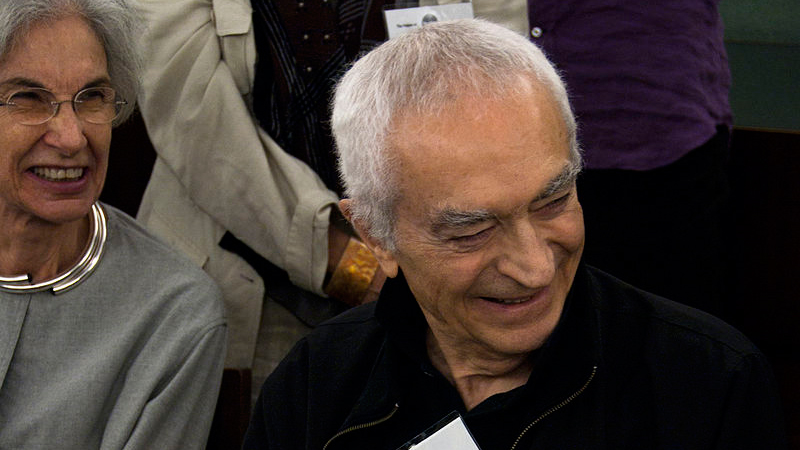
Massimo Vignelli died in 2014, taking with him a legacy of some of the most iconic design work of the by 50 years.
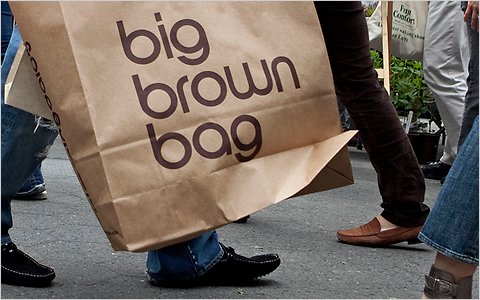
Counting IBM, Ford, Bloomingdale's (his 'Brown Purse' designs are still in use today), Saks, American Airlines and many more every bit clients, and counting Micheal Bierut amidst his protégés, Vignelli's legacy lives on. It lives on peradventure nigh prominently in the subway map and signage he designed for New York Metropolis in 1972.
At the time of his death in 2014, web designer Justin Reynolds wrote an in-depth guide for us on what we can all learn from Vignelli's blueprint principles.
In it, Reynolds wrote: "He was celebrated for his teaching as well equally his piece of work... Which means Vignelli's legacy is of fundamental importance to all designers.
"The web emerged too late in his career to let him to make a direct contribution to the medium, but the design principles that guided his work take had a profound affect upon the processes and aesthetics of both traditional and digital design."
06. Jonathan Barnbrook
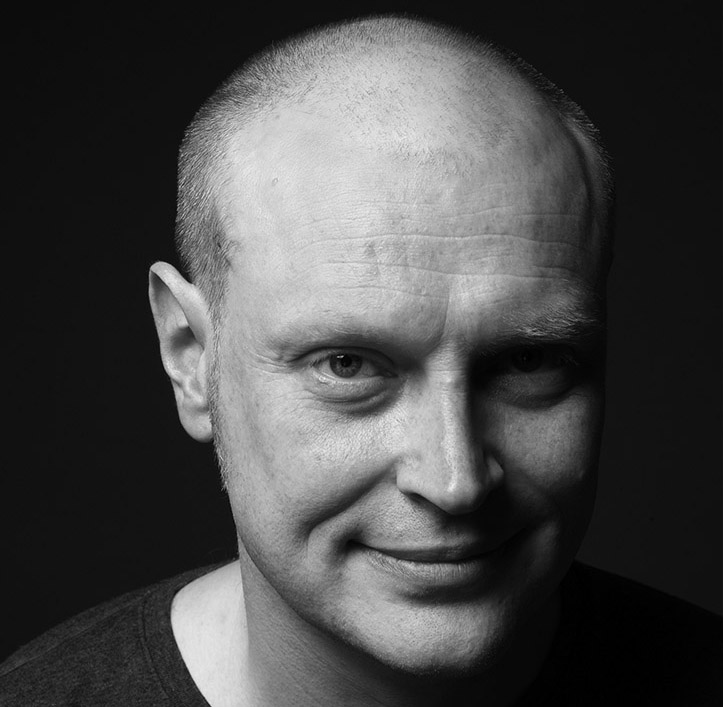
As David Bowie's latter-career go-to designer, Jonathan Barnbrook has become even more prominent in contempo times. But Barnbrook's work is far deeper than Heathen, The Adjacent Day and Blackstar.
Earlier Bowie, he was perhaps all-time known for his influential blazon blueprint – Exocet condign the most pirated font on the web soon after release in 1991 (it was also used in the FPS video game Diablo).
Barnbrook's VirusFonts foundry continued to thrive throughout the side by side couple of decades, with Bastard and Tourette being good examples of his still contemporary, but controversial, typefaces.

In an interview with us in 2012, Barnbrook said of Tourette: "Tourette is based on an early 19th century slab serif form. Having Tourette's means that people move exterior an agreed code of language... That's what I was trying to say in Tourette. In that location are swear words that are banned, but it's necessary that they appear in language also, because nosotros tin can't calibrate it otherwise. And I do like swearing."
Flip to the modern day and Barnbrook's masterpiece of sleeve blueprint for David Bowie's sign off album Blackstar – the artwork from which was released for free – is equally as skillful every bit the record itself. He likewise designed the all caps Exocet typeface.
07. Aries Moross
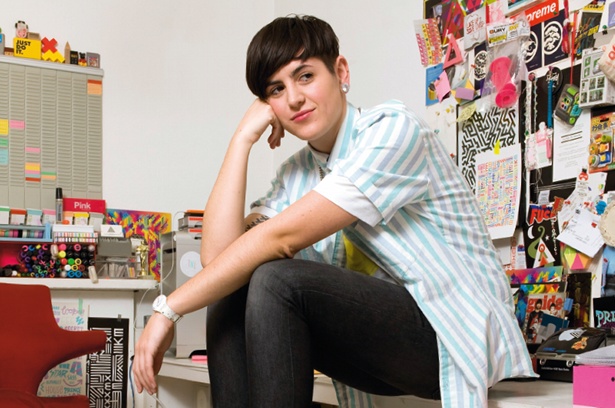
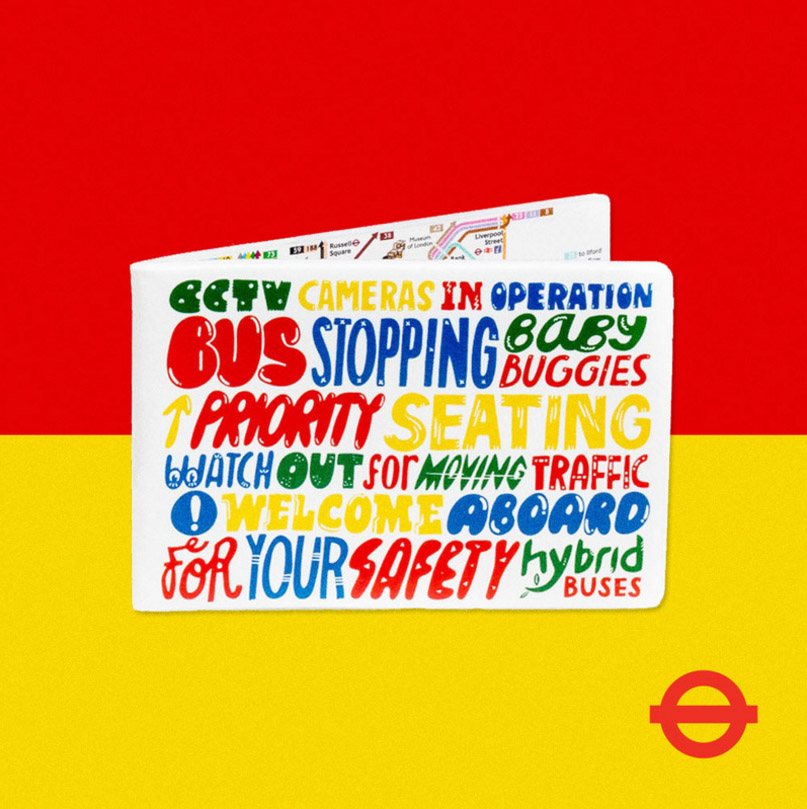
Aries Moross (previously known as Kate Moross) is artistic director of Studio Moross. They are an art director and designer from London who came onto the scene in 2008 with their trademark typography and energetic, fluid cartoon mode.
Moross has since become ane of the Britain's well-nigh sought-later on and successful designers, creating a myriad of album covers, magazine covers, branding and video. Moross even created live visuals for One Direction and the Spice Girl's 2019 tour – which they also art directed.
"I don't call up about things in terms of influence. I'grand non at school whatsoever more," Moross told Creative Bloq in an interview in 2011. "I don't expect at a painting past van Gogh and go off and do a van Gogh drawing in my sketchbook. I don't read magazines, I don't go to art galleries, I don't engage with the culture in a traditional fashion that perhaps a lot of people do.
"I think I become about of my ideas from everyday life – going to the shop or interacting with the bus commuter or seeing something by accident. I'm not i for organised civilisation or annihilation like that, and then I do endeavor to let things happen naturally. I definitely remember your influences are to do with your character, your life, your mood and general culture like TV and motion-picture show that you can't really escape."
08. Carolyn Davidson
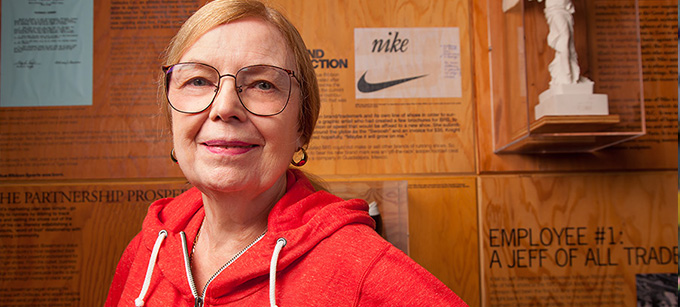
In that location aren't many logos that are more recognised the world over than Nike'southward iconic swoosh. Information technology'south often the simplest ideas that are the best and the Nike marking proves information technology.
Graphic designer Carolyn Davidson designed the logo equally a student at Portland Country Academy in 1971 – and was paid $35 for it by Nike founder Phil Knight (Knight met Davidson in an accounting class he was teaching).
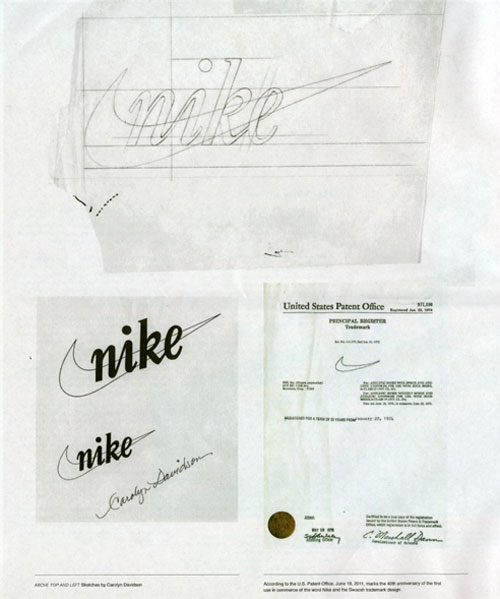
The tick-similar logo was seen as a symbol of positivity, but it's really the outline of the wing of the Greek goddess of victory whom the brand was named after. In 2011, Davidson told OreganLive.com that "information technology was a challenge to come up with a logo that conveyed move" and that Philip Knight was very impressed with the stripes of rival visitor Adidas – information technology was increasingly hard to come up with something original.
As Nike grew in the 1980s, Philip Knight gave Davidson an undisclosed amount of Nike stock (making up for the tiny fee for the logo, nosotros're sure).
09. George Lois
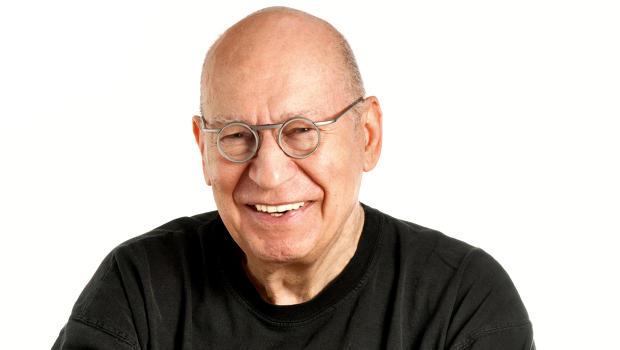
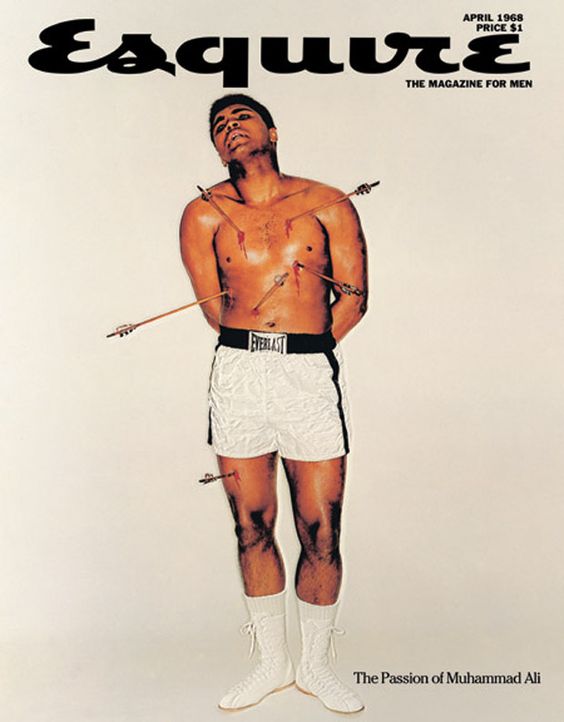
In terms of magazine pattern, George Lois was perhaps the original maverick. From 1962 to 1972 he enjoyed an incredible 10 years at US Esquire magazine, designing some of the most iconic, and mayhap controversial, covers in history – including April 1968's Muhammed Ali cover. He had big ideas, presented in a simple mode.
In an interview with Design Nail in 2014, Lois was asked about his ability to surprise. "When I create an paradigm, I want people to take a stride dorsum in awe when they see information technology for the starting time time. I desire them to be taken back offset by the forcefulness of the image, so by the meaning of the content. This makes people sympathize what'due south special about a product or how heady and interesting a magazine is.
"Another ane of my strongest skills is making something memorable. If something is memorable, it stays in the consciousness, and that helps sales."
Also every bit a successful mag designer, Lois was also a peak figure in the world of advertizement, working for a raft of huge clients including MTV, VH1, ESPN and Tommy Hilfiger.
10. Saul Bass
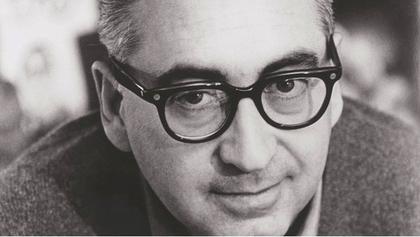
Information technology sounds similar hyperbole, but Bass was probably the nearly important graphic designer of the 20th century. His work transcended graphic design, poster blueprint, film titles, logos and more than – with perhaps his most iconic piece of work being opening sequences for Hitchcock.
In fact, his opening credit work spanned v decades – right upward to his decease in 1996. Some of his last work was for Martin Scorcese on Goodfellas and Casino.
In a 2011 article for the Telegraph, Scorcese reflected on Bass' genius: "I had an idea of what I wanted for the [Goodfellas] titles, merely couldn't quite get it. Someone suggested Saul, and my reaction was: 'Do nosotros cartel?' Later on all, this was the man who designed the title sequences for Vertigo, Psycho, Anatomy of a Murder... and so many other pictures that defined movies and moviegoing for me.
"When we were growing up and seeing movies, nosotros came to recognise Saul's designs, and I remember the excitement they generated within us.
"They made the motion-picture show instantly special. And they didn't stand apart from the movie, they drew you into it, instantly. Because, putting it very simply, Saul was a not bad film-maker. He would look at the film in question, and he would understand the rhythm, the structure, the mood – he would penetrate the heart of the pic and find its surreptitious."
Equally a logo designer Bass was too prolific, designing the marks for AT&T, Kleenex, United Airlines, Minolta and many, many more than.
11. Morag Myerscough
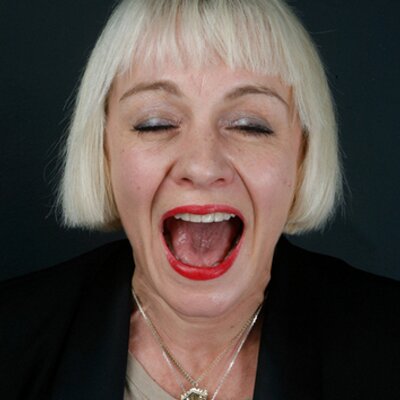
For over xxx years, Morag Myerscough has been creating stunning supergraphic installations – chiliad scale installations, pop-ups and wayfinding graphics that bring spaces to life through her trademark bright colours.
Her clients – through her studio, Studio Myerscough – include London's Barbican, Majestic London Hospital and the Stockholm Kulturfestival. Later in 2021 will see a super-colourful installation project for the Metropolis of Paris, which builds an 'subsequently' to Covid.
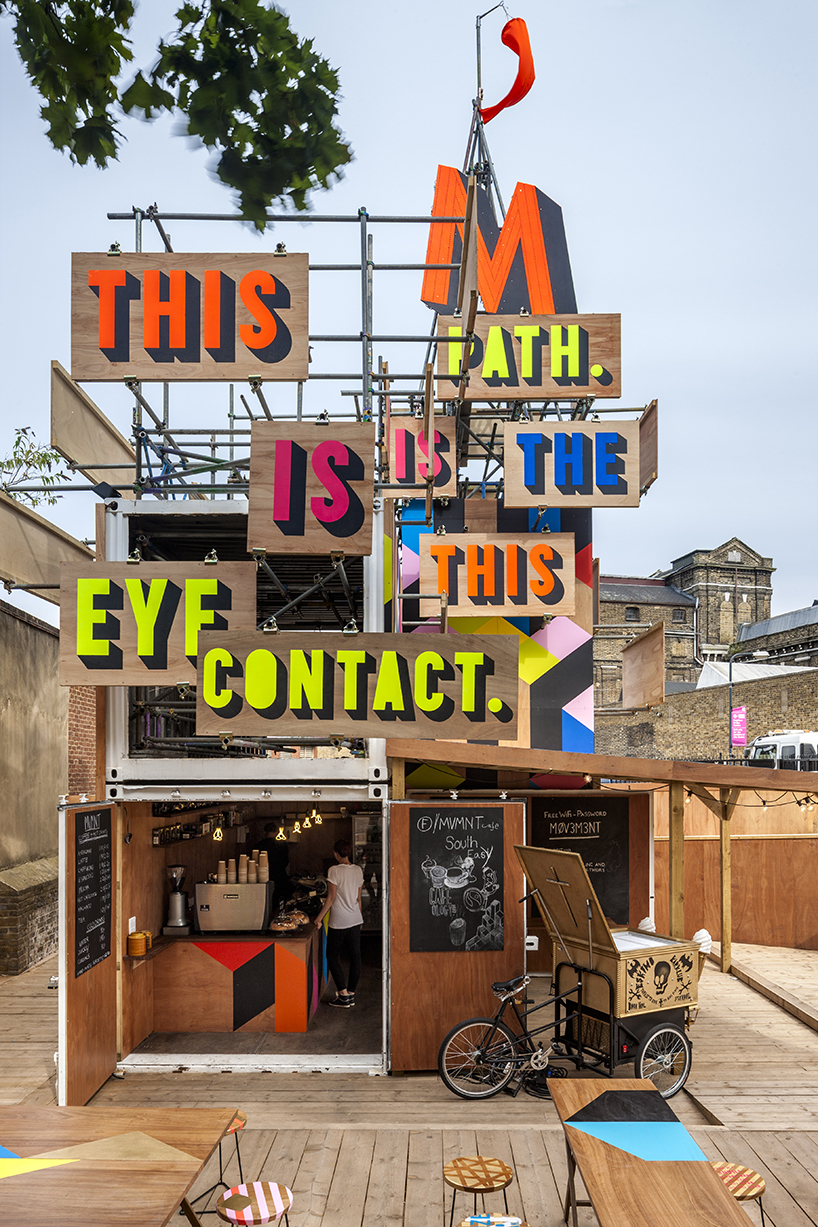
In 2013, Myerscough revealed to Design Boom just what makes her tick: "What I bask the most [about environmental graphic design projects] is that people enjoy and reply to the places we make and it makes a divergence to them.
"I put a narrative in the building; nosotros make places where people feel they vest," she says. Her awards include the Design Museum's Design of the Year.
12. Lindon Leader

Leader past name, leader by nature, Lindon Leader is responsible for one of the cleverest logos out in that location, utilising negative infinite in a fashion never done before (at least for a huge global company). In 1994, Leader was senior blueprint director at Landor Associates when the FedEx logo was designed. Information technology was after practical to 600 aircraft and 30,000 ground vehicles. At present there's a portfolio piece.
Leader told the states, in an interview in 2013, that Landor did effectually 200 designs for the logo before settling on a shortlist of ten to show to the FedEx brand manager. And the employ of white? Particularly that hidden arrow betwixt the E and the X? "I cannot tell yous how many times I fight with a client who says 'I'm paying an enormous amount of coin to pay for an advertising in a magazine and you're telling me you want threescore per cent of information technology to be empty space?'" he smiles.

"On the i hand I tin understand where they're coming from, but basically the average client does not accept a sophisticated enough appreciation of white space to understand that it can exist a strategic marketing tool."
As well every bit FedEx, Leader worked on many loftier-profile branding projects while at Landor, quoting his favourites equally Hawaiian Airlines, Cigna Insurance and Banco Baresco. But Leader understands just what the FedEx logo ways: "While I think I'yard blest and privileged to have said I designed the FedEx logo, sometimes I think I'm going to go to my grave and that'south the only thing people are going to remember me for."
Next page: More great designers who shaped the design industry

Rob is editorial, graphic design and publishing pb at Transport for London. He previously worked at Time to come Publishing over the grade of several years, where he launched digital art magazine, ImagineFX; and edited graphic design mag Computer Arts, as well every bit the Computer Arts Projects serial, and was besides editor of applied science magazine, T3.
Related manufactures
gearyyourstrather.blogspot.com
Source: https://www.creativebloq.com/graphic-design/names-designers-should-know-6133211
0 Response to "Art Direction Product Design Visual Designer Why Are There So Many Names?"
Post a Comment