Could Baby Completely Digest Milk With No Poop?
How long can a baby go without pooping? There is not one simple answer to this question, as it depends on the baby's age, whether they are breastfed, formulafed or have started with solid foods.
Let's take a look at both normal reasons (i.e. full digestion or constipation) and illness-related reasons (e.g. obstruction) that may cause a baby to stop defecating. We go through safe remedies (when needed), important constipation signs, and when to call the Doctor.
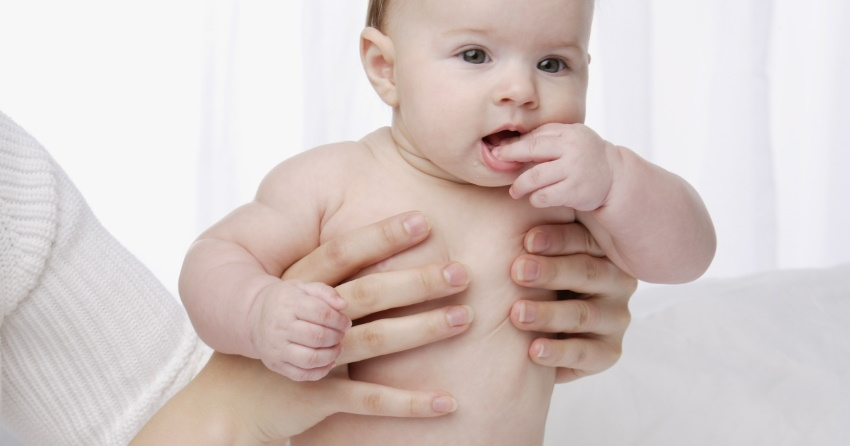
Reasons & Remedies When Your Baby Isn't Pooping
Before I became a mom, it never crossed my mind how much time I would spend worrying about my children's bowel movements. But I sure did. A lot happens during the first year, and a baby's bowel movements will change a lot as the baby grows and his or her diet changes.
One of the more surprising things that happen, is that babies may stop pooping completely for several days. It is easy and completely rational to believe this to be constipation or some illness. And it can be. But it also doesn't have to be – it can be completely normal too!
How Often Does a Baby Poop
First of all, it is important to know how often the average baby will poop depends on his or her age as well as on if being breastfed or formula-fed:
- A newborn baby will pass meconium 24-48 hrs from birth. The stool may change in color — becoming greenish on day 4.
- From day 5 or 6 of living, newborns may poop after every feeding. The frequency may vary, ranging from 4 episodes to 12 episodes per day. The texture may be soft and runny. And the color may be yellowish, yellow-green, or brownish.
- At 1-month-old, the average is still some 4 times per day. Breastfed babies usually poop after feeding. Some may go for days without pooping. This is because the gut of the newborn absorbs all the components from the breastmilk, leaving small waste to go down or none at all.
- By the time your baby is 2 months old, the average has dropped to 1 episode per day.
- At 3 months, a fully breastfed baby may go for up to 5 to 10 days without pooping. They grow rapidly and digest practically everything they consume. This can continue until the baby is introduced to solid baby food.
- Formula-fed babies should continue pooping more or less every day.
Remember that the variation can be quite large and your baby is not likely to be constipated unless you notice some of the symptoms described below.
As you can see, there is no ONE correct answer to the question of how long can a baby go without pooping.
Two of my kids had periods at around 3 months old when they pooped every 10-14 days – this is quite a long time for not pooping! Very convenient… However, they were both completely breastfed and showed no signs of constipation or illness.
Breastfed, formula-fed, or solids-fed baby not pooping?
There are majors differences in the risk of constipation depending on what your baby eats. Let's break down the differences and reasons.
Breastfed Baby Not Pooping
There's a major difference in the risk of constipation between breastfed babies and those on formula.
If you are breastfeeding and if your baby has had normal breast milk poop earlier, but your baby is not pooping now, chances are that he or she is only going through a growth period and therefore actually absorbs pretty much everything he eats.
Also, at around 4 weeks of age, a baby's digestive system begins to mature and the number of bowel movements usually decreases, especially if the baby is breastfed.
If your baby seems completely happy and eats and urinates, just as usual, there is probably nothing you have to do. The poop will come.
Formula-fed Baby Not Pooping
If your baby is formula-fed, the risk of constipation is higher.
Formula-fed babies are more prone to become constipated because the formula is much harder to digest than breast milk since they have bigger proteins than breastmilk. Hence, this is the reason why formula-fed babies poop regularly.
I often see parents searching for answers regarding their formula-fed baby that hasn't pooped for e.e. 2 days. 2 days can probably be OK, but a formula-fed baby should not go several days between pooping, as it can be a sign of constipation. You'll find tips on constipation remedies further down this article.
One thing to note is that although milk protein allergy is not common, but a possible reason for constipation in formula-fed babies. You find symptoms of milk protein allergy here.
Newborn Baby Not Pooping – 3 Reasons
1. Hirschsprung's disease
Regardless of if your baby is breastfed or formula-fed, it is important to know when your baby started having constipation problems and if he or she passed meconium in the first 36 hours of his or her life.
If the meconium passage was delayed and your baby has been having constipation since birth, one of the possible reasons for constipation might be Hirschsprung's disease.
This is a condition caused by the absence of neural ganglia in the terminal bowel regions. The absence of the ganglia leads to decreased peristalsis of the colon, hence the infant is constipated.
You'll find an excellent explanation of Hirschsprung's disease in this video:
Hirschsprung Disease, Colitis, and Fecal Incontinence
The condition is usually diagnosed by performing a rectal exam in a constipated child during a routine pediatric visit. (You can read more about Hirschsprung's disease here at Mayo Clinic. (Opens in new window)
2. The normal first few days
However, it is worth repeating that a newborn baby that has passed meconium is not likely to poop very frequently during the first few days – simply because they don't eat very much. But after 5 – 6 days, your newborn baby should be pooping several times per day.
3. Newborn not pooping but farting
A common situation is a young or newborn baby that is not pooping but passing gas. Unless your baby is showing signs of constipation or illness, this is highly likely to be a normal newborn immature digestive system.
The baby will fart more often than poop, and will probably also strain a bit to poop, even with loose stools. This is nothing to worry about. Farting means the baby's gut is patent and functioning.
Constipation after Starting Solids
It is very common for babies to become constipated when introduced to solid foods. This is especially true for breastfed babies since their digestive system isn't used to anything but the very easily digested breastmilk.
The introduction of rice cereal is a known reason for baby constipation. Cow's milk is another one.
If your baby is not pooping and has started with solid baby food (including cereal), you can find additional, helpful tips in these posts:
- Foods to soften hard stools for baby
- Breastfed baby only eating a little bit of solid baby food, and still can't poop
- 8-month-old baby refuses to poop
Signs of constipation (and not) in babies
Here are some signs of constipation to look for:
- In a newborn, firm stool less than once a day with straining and difficulty passing them
- In older babies, firm stools less often than 7 days for breast-fed babies and 4 days for bottle-fed babies
- Dry, hard stools and pain on passing them
- Hard, pebble-like stools passed by a baby who strains during a bowel movement
- Signs of blood along the outside of the poop
- Belly pain along with hard, infrequent stools (can be manifested by a baby crying when pooping or trying to poop)
How to Mitigate Baby Constipation (9 Remedies)
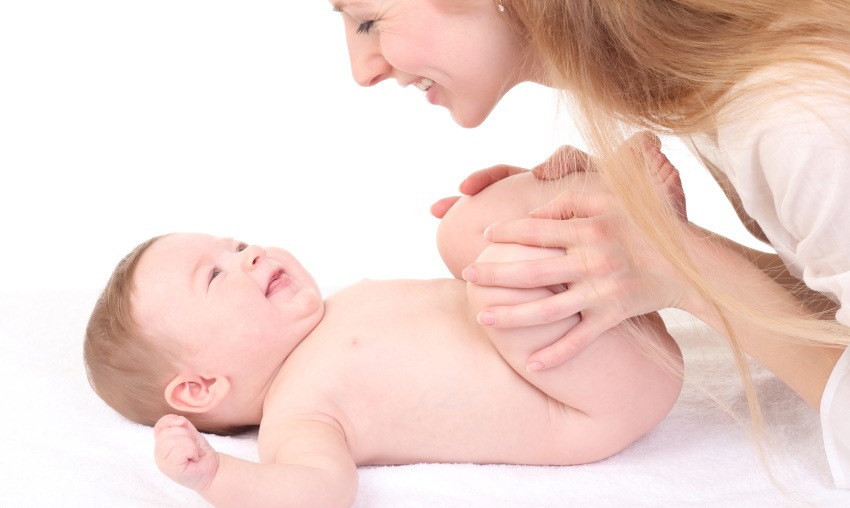
While it is normal for babies to strain from time to time to move the stool along through the intestines, crying hard when trying to poop is not.
1. Baby Massage for Constipation
If you want to do something to help your baby while straining, try holding his or her knees against his or her chest to help your baby "squat". This is also very effective for tummy pain to release gas. Squatting is an effective position in pooping since it relaxes the colon.
Here are some more tips for efficient baby massage.
Also watch the below video for an excellent explanation of how to use baby massage for constipation.
How To Treat Colic & Constipation - Baby Massage Course Part Two | Channel Mum
2. Change the type or brand of formula milk
If your baby is formula-fed, you can experiment with different types or brands of formula to find the one that has the least tendency to result in constipation. For some babies, soy-based formulas work better. For others, a hydrolysate formula, such as Nutramigen (link to Amazon) , can make a real difference. Formula milk that is tummy-friendly such as Similac Tummycare, can also help with constipation.
3. Feed smaller amounts
You can also feed your baby smaller amounts of formula more frequently, to help the intestines cope with the formula.
Twice as often is the rule of thumb.
4. Double-check how much formula powder you use
Make sure that you don't add too much formula powder when preparing the formula. Take care not to overfill or tightly pack the scoop.
The ratio of formula milk to water must be considered since these are made of bigger components. To avoid constipation, the ratio of 1 scoop formula milk for 2 ounces of water is usually the best, but make sure to follow the instructions for your baby's formula.
5. A bit of water
You can also try offering your baby some extra water – about 1 oz once or twice a day. However, don't give water to very young babies.
Giving too much water to infants can cause water intoxication. This can dilute the nutrients in the baby's body, causing reduced levels of sodium. This can then lead to lethargy, drowsiness, dizziness, and confusion. The kidneys can also become overwhelmed if the infant takes in too much water. This can cause an electrolyte imbalance in the infant.
6. More breastmilk
If you breastfeed at all, you can try to increase the share of breast milk your baby gets. Breast milk is a great laxative since this is easy to digest.
7. Stimulate the anus
Another short-term option, that can be used once in a while, is to insert a q-tip very gently into your baby's anus. Sometimes that is enough to trigger the bowel movement. Just don't make it a habit; the baby needs to learn how to poop without your help.
8. Foods that soften the stools
For babies that have been introduced to solids foods, make sure you feed your baby foods that soften stools. Fruits and food that are high in fiber are great in cleaning the gut. Corn, pineapple, apples, and mangoes are just some of the foods that are high in fiber.
9. Baby laxatives and glycerin suppositories
There are also baby laxatives or glycerin suppositories available, but don't use them more than as a last resort. It is much better to try to change what your baby eats than to use short-term solutions like these are. As mentioned earlier, it is better for the baby to learn how to poop on his own.
Baby Not Pooping – Call the Doctor if…
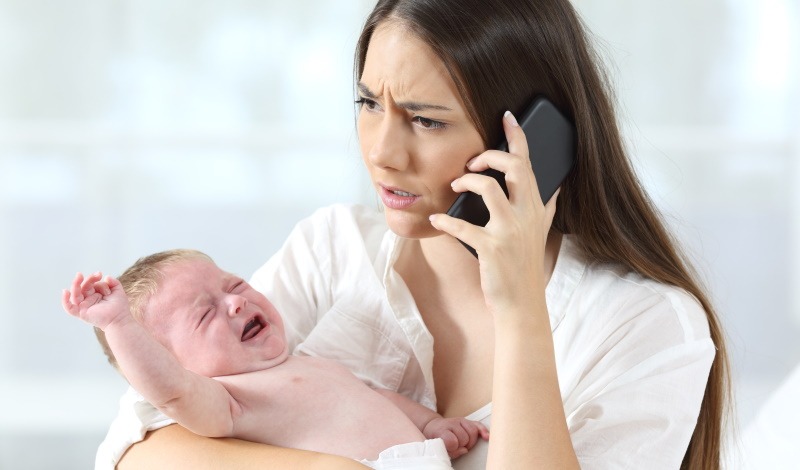
If your baby is a few days old and has not pooped regular breast milk or formula poop, definitely call a doctor, to rule out any blockage and make sure your baby eats enough.
For a newborn baby that has pooped and then stopped, I would contact a pediatrician if it has been a couple of days since your baby pooped, regardless of if the baby is breastfed or formula-fed. This is to get advice on possible treatment for constipation and to make sure that your baby is completely healthy.
For older babies, if they are in pain (regardless of if the poop is hard or not), a doctor should assess the situation.
Blood in poop, beyond some streaks, should also be assessed. (You'll find more guidelines on blood in your baby's poop here.
Finally, if your baby continues to be constipated despite your efforts to adjust his or her diet, this is another good reason to discuss the situation with a pediatrician. Your baby may be allergic to milk protein or lactose intolerant, for example, and need a new type of formula. (Read more about milk protein allergy and different formulas here.)
Don't use baby laxatives or glycerin suppositories without consulting a doctor first. It may be completely unnecessary.
I wish you and your baby good luck!
Paula
Helpful Resources
If you want more in-depth information and tips on baby poop issues, here are a few books to check out. (Links to Amazon)
- Baby Poop: What Your Pediatrician May Not Tell You … about Colic, Reflux, Constipation, Green Stools, Food Allergies, and Your Child's Immune Health.
- Eat, Sleep, Poop: A Common Sense Guide to Your Baby's First Year.
- The Ins and Outs of Poop: A Guide to Treating Childhood Constipation.
- It's No Accident: Breakthrough Solutions To Your Child's Wetting, Constipation, UTIs, And Other Potty Problems.
Research References
Infrequent stools in exclusively breastfed infants – PubMed (nih.gov)
The bowel movement characteristics of exclusively breastfed and exclusively formula fed infants differ during the first three months of life – PubMed (nih.gov)
Read Next About Baby Poop
- What can I give my baby for constipation?
- Pooping in difficult for my preemie
- My 4-month-old has not pooped in 2 days
- All articles about baby poop and pee
Who else has a baby that is not pooping? Add your own comments below!
Could Baby Completely Digest Milk With No Poop?
Source: https://www.easybabylife.com/baby-not-pooping.html
0 Response to "Could Baby Completely Digest Milk With No Poop?"
Post a Comment